
Noor Asadi Glass Factory processes premium-quality Laminated Glass solutions designed for a wide range of architectural, commercial, and industrial applications. Utilizing advanced lamination technology and strict quality control procedures, we produce high-performance
laminated glass for diverse glazing requirements.
What is Laminated Glass?
Laminated glass consists of two or more glass panes permanently bonded together with one or more interlayers, typically Polyvinyl Butyral (PVB), Ethylene Vinyl Acetate (EVA), or SentryGlas® (SGP). The interlayer holds the glass together even when broken, helping maintain the integrity of the glazing system.
Key Advantages
Laminated glass offers numerous benefits that make it a preferred choice for modern glazing applications:
- Enhanced safety by retaining glass fragments after breakage.
- Improved security against forced entry and impact.
- Excellent UV protection, helping reduce fading of interior furnishings.
- Effective acoustic insulation for quieter indoor environments.
- Increased durability and long-term performance.
- Available in a wide range of thicknesses, colors, and configurations.
- Suitable for both decorative and structural glazing applications.
Manufacturing Excellence
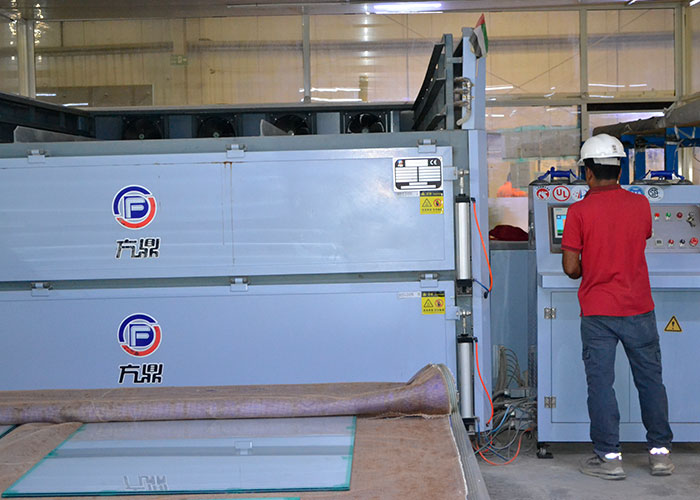
At Noor Asadi Glass Factory, laminated glass is produced using advanced processing equipment and stringent quality assurance procedures to ensure:
- Superior optical clarity.
- Strong interlayer adhesion.
- Precise dimensional accuracy.
- Long-term durability and performance.
- Compliance with international safety and quality standards.
Quality Measurements and Testing
To ensure consistent product performance, our laminated glass undergoes comprehensive quality inspections and testing, including:
- Thickness tolerance verification for glass and interlayer layers.
- Optical distortion and visual quality assessment.
- Interlayer adhesion testing.
- Impact resistance and post-breakage retention evaluation.
- Light transmission and haze measurement.
- UV filtration performance testing.
- Dimensional accuracy and edge quality inspection.
- Acoustic performance verification where specified.
- Environmental durability testing for heat, humidity, and aging resistance.
Typical performance characteristics may include:
- UV blockage of up to 99% depending on interlayer type.
- Visible light transmission tailored to project requirements.
- Acoustic noise reduction improvements of up to 35–40 dB in selected configurations.
- Compliance with applicable safety glazing impact standards.
Interlayer Options
We offer laminated glass with a variety of interlayer materials to meet specific project requirements:
- PVB (Polyvinyl Butyral): Excellent clarity and acoustic insulation.
- EVA (Ethylene Vinyl Acetate): Superior adhesion, moisture resistance, and suitability for decorative and specialty laminated glass applications.
- SGP (SentryGlas®): Enhanced structural strength and rigidity for demanding architectural and glazing projects.
Applications
Our laminated glass products are widely used in:
- Building façades and curtain walls.
- Skylights and overhead glazing.
- Balustrades and glass railings.
- Doors and partitions.
- Canopies and walkways.
- Security and safety glazing systems.
- Commercial, residential, and institutional buildings.
Quality Commitment
Noor Asadi Glass Factory is committed to delivering laminated glass solutions that meet high standards of quality and performance. Through continuous investment in technology and expertise, we provide reliable glazing products that support modern architectural and engineering requirements.
By combining advanced lamination technology with high-quality interlayer options, including PVB, EVA, and SGP, rigorous quality control, comprehensive performance testing, and the many safety, security, acoustic, and UV-protection advantages of laminated glass, Noor Asadi Glass Factory delivers dependable glazing solutions for demanding construction and design projects.
Frequently Asked Questions: Laminated Glass
What is laminated glass?
Laminated glass is made of two or more glass panes permanently bonded with an interlayer such as PVB, EVA or SentryGlas (SGP). If the glass breaks, the interlayer holds the fragments in place, helping the glazing stay intact.
What is the difference between laminated and tempered glass?
Tempered glass is stronger and breaks into small blunt pieces, while laminated glass holds together when broken. For maximum safety the two are often combined as laminated tempered glass.
Does laminated glass block UV rays and noise?
Yes. The interlayer blocks most UV radiation, helping reduce fading of furniture and finishes, and it also helps reduce noise transmission compared with single monolithic glass.
Where is laminated glass used?
Laminated glass is used for skylights, canopies, balustrades, façades, shopfronts, partitions and any area where safety, security or overhead glazing is required.
Can laminated glass be made with tempered or heat-strengthened glass?
Yes. Laminated glass can be produced using annealed, heat-strengthened or tempered glass depending on the strength and safety requirements of the project. Share your specifications and we will recommend the right build-up.
Have a Project in Mind?
Share your drawings, sizes and glass requirements, and our sales & estimation team will get back to you with a quotation.