
When it comes to safety in the built environment, few materials have as significant an impact as the glass we choose. In the UAE — where high-rise commercial towers, luxury hotels, busy retail malls, and modern villas define the skyline — the specification of the right type of safety glass is not merely best practice. It is a regulatory requirement.
Tempered glass, also known as toughened glass, has become the go-to safety glazing solution for a wide range of applications across Abu Dhabi and the broader UAE. In this article, Noor Asadi Glass & Aluminum Factory explains what tempered glass is, how it is made, where it must be used, and why buying directly from a UAE glass factory is the smartest choice for your project.
What Is Tempered Glass?
Tempered glass is a type of safety glass that has been treated through a controlled thermal or chemical process to increase its strength compared to standard (annealed) glass. The tempering process involves heating the glass to approximately 620°C and then rapidly cooling it — a technique known as quenching.
This rapid cooling creates a state of compression on the glass surface and tension in its core, which gives tempered glass its distinctive properties:
- It is approximately 4–5 times stronger than ordinary annealed glass of the same thickness
- When it does break, it shatters into small, rounded granules rather than dangerous sharp shards
- It has superior thermal resistance, withstanding temperature differentials of up to 250°C
These characteristics make tempered glass a critical safety material for applications where human contact or extreme conditions are likely.
Tempered Glass vs. Ordinary Glass: Why It Matters in UAE Buildings
Ordinary float glass breaks into long, jagged shards that can cause serious injury. In a public building — a hotel lobby, a retail shop, a school, or a hospital — the consequences of glass breakage with standard glass can be severe.
Tempered glass is engineered specifically to minimise injury risk. When it breaks, the small, blunt granules it produces are far less likely to cause lacerations. This is why building codes
in the UAE mandate tempered or safety glass for specific applications, particularly anywhere that people are likely to come into contact with glass surfaces.
UAE Building Code Requirements for Tempered Glass
In Abu Dhabi, the Abu Dhabi International Building Code (ADIBC) sets out specific requirements for safety glazing. Tempered or laminated safety glass is required in the following situations:
- Glazed doors and sidelights (panels adjacent to doors) in commercial and residential buildings
- Glass used in areas below 500mm from floor level — known as critical locations
- Shower screens, bathroom enclosures, and wet area partitions
- Glass balustrades, railings, and handrail systems
- Overhead glazing and skylights (often requiring laminated tempered glass)
- Glass in areas subject to human impact in public buildings (shopping malls, hotels, schools, hospitals)
- Structural glass used in staircases and flooring
Specifying non-tempered glass in these locations is not only a safety risk — it can result in project delays, failed inspections, and costly replacement during or after construction.
Key Applications of Tempered Glass in UAE Projects
Commercial Shopfronts and Retail Units
Frameless or semi-frameless glass shopfronts are a defining feature of modern UAE retail environments. Tempered glass is the standard specification for all shopfront glazing — providing the structural strength to handle the large unsupported spans typical of high-street and mall retail units, while meeting safety requirements for high-footfall public spaces.
Hotel and Hospitality Projects
In hotels, tempered glass appears throughout the property — in lobby partitions, room dividers, bathroom enclosures, pool barriers, and facade glazing. The combination of aesthetic clarity, structural strength, and safety compliance makes tempered glass indispensable for the UAE’s world-class hospitality sector
Office and Commercial Partitions
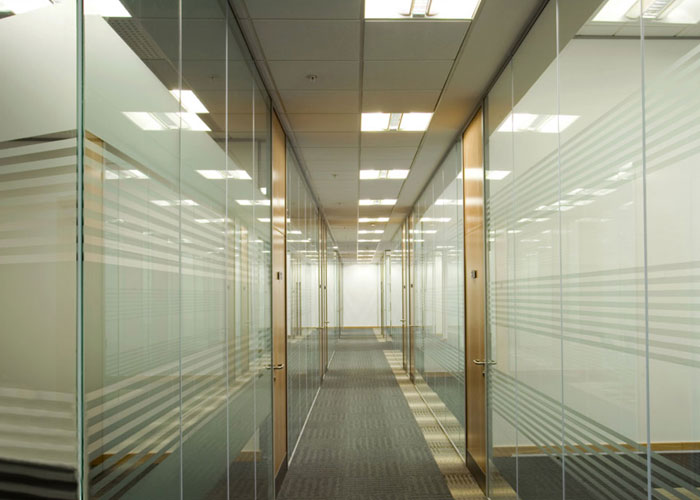
Glass partitions have become the preferred choice for modern UAE office fit-outs, offering open, light-filled workspaces while maintaining acoustic separation. All internal glass partitions used in commercial offices should be specified in tempered glass to comply with safety glazing requirements and to protect employees in the event of accidental impact.
Residential Villas and Apartments
In villa and apartment projects, tempered glass is used for sliding doors, entrance doors, shower enclosures, balcony railings, and staircase balustrades. In luxury residential projects, large-format tempered glass panels create seamless indoor-outdoor connections that are both striking in appearance and fully compliant with UAE safety standards.
Facades and Curtain Walls
In commercial towers and mixed-use developments, tempered glass is often used as part of structural glazed facades and curtain wall systems. For applications requiring both safety and enhanced fall protection, heat-strengthened or laminated tempered glass is specified.
Heat Strengthened Glass vs. Fully Tempered Glass
It is worth noting the distinction between fully tempered glass and heat-strengthened glass, as both are produced by Noor Asadi and serve different purposes:
- Fully Tempered Glass: Approximately 4–5x stronger than annealed glass. Breaks into small, safe granules. Required for safety-critical applications such as doors, balustrades, shower screens, and floor-level glazing.
- Heat Strengthened Glass: Approximately 2x stronger than annealed glass. Breaks into larger pieces similar to annealed glass but with fewer fragments. Used in applications where improved thermal resistance is needed but safety glazing standards for full tempering do not apply — such as spandrel panels in curtain walls.
Choosing the wrong category for your application can result in a non-compliant installation. If you are unsure which type your project requires, Noor Asadi’s technical team can advise based on the specific application and applicable local building codes.
Why Buy Tempered Glass Direct from a UAE Factory?
Many buyers in the UAE purchase glass through intermediaries, distributors, or fit-out contractors who source glass from third parties. While this can seem convenient, buying directly from an established glass factory like Noor Asadi offers significant advantages:
- Competitive Pricing: Eliminating the middleman means you pay the actual production price, not a marked-up reseller price. For large-scale projects, the savings are substantial.
- Custom Specifications: As a glass processing factory, we can produce tempered glass in custom sizes, thicknesses, shapes, and configurations — including holes, cutouts, and edge finishes — that standard resellers cannot supply.
- Quality Assurance: Every tempered glass unit we produce undergoes quality checks before dispatch. Our facility is equipped with CNC cutting, automated tempering furnaces, and edge processing lines.
- Lead Time and Logistics: With our warehouse and delivery fleet based in Mussafah, Abu Dhabi, we service clients across the UAE with reliable lead times and nationwide delivery.
- Technical Support: Our team can assist with product selection, reading architectural drawings, and advising on compliance with UAE building codes — support that a reseller typically cannot offer.
Frequently Asked Questions
How can I tell if my glass is tempered?
Tempered glass is required by law to be marked with a permanent etched or ceramic-printed stamp, typically showing the manufacturer’s name, the glass type, and compliance with the relevant standard (such as EN 12150 or ASTM C1048). The stamp is usually found in a corner of the glass panel. If you are unsure whether existing glass in your building is tempered, contact a glass professional for an assessment.
Can tempered glass be cut or drilled after tempering?
No. Once glass has been tempered, it cannot be cut, drilled, or significantly altered without causing it to shatter. All cutting, drilling, notching, and edge work must be completed before the tempering process. This is why it is essential to provide precise specifications when ordering tempered glass from a factory.
What thickness of tempered glass should I use for my project?
The appropriate thickness depends on the application, panel size, and structural loads involved. Common thicknesses range from 6mm for interior partitions and shower screens to 10mm, 12mm, and 15mm for structural applications like balustrades, large doors, and facades. Noor Asadi’s team can provide guidance based on your specific project requirements.