
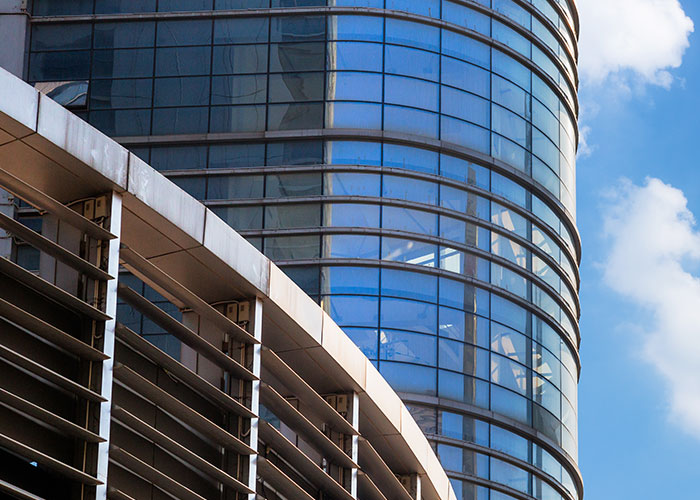
QUICK ANSWER: High-performance glass — Low-E coatings, solar control coatings and double glazing (IGU) — reduces how much heat a building’s facade lets in, which is the single biggest lever on cooling cost in the UAE’s climate. It’s increasingly required, not optional: Abu Dhabi’s Estidama Pearl Rating and Dubai’s Al Sa’fat Green Building Rating both assess glazing performance (U-value and SHGC) directly, and Dubai has been reported to be moving toward requiring solar-generating glass on new high-rise towers.
Cooling is the single largest energy cost in most UAE buildings, and glass is usually the weakest link in how much heat a facade lets in. With exterior temperatures regularly passing 40°C for months at a time, the glazing specified on a project does more than let in light — it sets a building’s cooling load, its utility bills, and increasingly, whether it meets Abu Dhabi’s and Dubai’s green building requirements. This guide covers what high-performance glass
actually does, how it fits UAE codes, and what’s changing next.
What Is High-Performance Glass, and Why Does It Matter in the UAE?
High-performance glass is glass engineered to control how much heat and light pass through it, rather than letting both through unfiltered like ordinary clear glass. In UAE construction, that control is what keeps a glazed building livable and affordable to cool — the three technologies covered below (Low-E coatings, solar control coatings and double glazing) are the main ways it’s achieved.
Why Glass Performance Is Under the Spotlight in UAE Construction
Ordinary clear glass transmits most of the solar heat that hits it straight into the building, which is why cooling can account for a large share of a UAE building’s total energy bill. Two figures matter most when specifying glass for this climate:
- U-value — how much heat passes through the glass by conduction. Lower is better.
- Solar Heat Gain Coefficient (SHGC) — how much of the sun’s heat the glass lets through, as opposed to just visible light. Lower SHGC means less heat gain for the same daylight.
Getting both right, rather than defaulting to the cheapest clear glass, is what separates a building that fights its own climate from one that works with it.
UAE Green Building Codes and What They Mean for Glazing
Both of the UAE’s major cities now run their own green building frameworks, and glazing performance sits at the center of both:
- Abu Dhabi — the Estidama Pearl Rating System requires government buildings to achieve at least two of five Pearls, and new public buildings at least one Pearl. Facade and glazing performance (U-value, SHGC, shading) is one of the core categories assessed.
- Dubai — the Al Sa’fat Green Building Rating pushes toward thermally efficient facades to reduce cooling loads, with its own tiered rating system.
- International developers often layer LEED requirements on top of either system for projects marketed to global tenants or buyers.
A facade consultant or glass supplier familiar with both frameworks can specify glazing that clears the relevant rating the first time, rather than requiring a late-stage redesign.
Estidama (Abu Dhabi) vs. Al Sa’fat (Dubai) at a Glance
| Estidama — Abu Dhabi | Al Sa’fat — Dubai | |
|---|---|---|
| Applies to | Government and public buildings most strictly; voluntary elsewhere | Dubai Municipality-regulated buildings, with its own tiered system |
| Rating system | Pearl Rating — 1 to 5 Pearls | Tiered system (bronze/silver/gold/platinum-style tiers) |
| Minimum for new public buildings | At least 1 Pearl | Set by Dubai Municipality per building category |
| Minimum for government buildings | At least 2 of 5 Pearls | Set by Dubai Municipality per building category |
| Glazing assessed on | U-value, SHGC, shading | Thermal efficiency, cooling load reduction |
Figures above reflect the published structure of each rating system; always confirm current thresholds for a specific project with Abu Dhabi’s Department of Municipalities and Transport or Dubai Municipality, as rating criteria are periodically updated.
Low-E Coatings, Solar Control and Double Glazing: The Technical Toolkit
Three technologies do most of the work in UAE high-performance glazing:
- Low-emissivity (Low-E) coatings — a microscopically thin coating that reflects infrared heat while still letting visible light through, cutting solar heat gain without darkening the glass.
- Double glazing / Insulated Glass Units (IGU) — two panes separated by a sealed air or gas-filled gap, which significantly reduces heat conduction compared to single glazing.
- Spectrally selective and solar control coatings — tuned to block the specific wavelengths that carry the most heat, which is what allows architects to keep large glass facades without an equally large cooling bill.
Shading devices, frit patterns and orientation (favoring north-facing glazing where possible) are the architectural complement to these glass technologies, and the two are usually specified together on larger projects.
Which Glazing Technology Should You Specify?
| Technology | What it does | Best for |
|---|---|---|
| Low-E coating | Reflects infrared heat, keeps visible light | Most facades needing daylight + heat control |
| Solar control / spectrally selective coating | Blocks specific heat-carrying wavelengths | Large glass facades with high sun exposure |
| Double glazing (IGU) | Reduces heat conduction via sealed air/gas gap | Overall thermal performance, acoustic comfort |
| Tinted glass | Reduces glare and some heat via color/density | Budget-conscious projects, secondary facades |
An Emerging Frontier: Solar-Integrated Glass
The next step for UAE glazing is glass that does more than block heat — it generates power. Dubai Municipality and the Dubai Land Department have been reported to be moving toward a requirement for new high-rise residential and commercial towers to include transparent solar-cell technology in their facades, as part of the wider Dubai Clean Energy Strategy, with claims that it could meaningfully cut a building’s external energy demand.
This isn’t entirely new ground for the region — UAE-based solar glass R&D has been underway for over a decade, with earlier local projects demonstrating photovoltaic glass units that preserve transparency while generating electricity. The specifics of any mandate (coverage thresholds, which towers qualify, certification requirements) are still firming up, so developers planning new high-rises should treat this as a direction to watch rather than a
finalized spec — but it signals where facade requirements in Dubai are headed.
What This Means for Architects, Contractors and Developers
- Specify glazing performance (U-value, SHGC) early in design, not as a value-engineering afterthought — retrofitting a facade to meet a rating after the structure is up is far more expensive than specifying correctly from the start.
- Work with a glass processor who already supplies Estidama- and Al Sa’fat-aligned projects, so testing and documentation match what assessors expect.
- Pair glazing choices with shading and orientation early, since the two are evaluated together under both rating systems.
- Keep an eye on solar-integrated glazing requirements if you’re planning a high-rise tower in Dubai — it’s a moving target worth tracking with your facade consultant.
FAQ
What is SHGC and why does it matter in the UAE?
SHGC (Solar Heat Gain Coefficient) measures how much of the sun’s heat passes through a piece of glass, separate from visible light. In a hot climate like the UAE’s, a lower SHGC keeps a building brighter without adding unnecessary cooling load.
What’s the difference between Low-E glass and solar control glass?
Low-E glass uses a thin reflective coating to cut infrared heat transfer while preserving most visible light. Solar control glass is a broader category that can include Low-E coatings, tinting, and spectrally selective coatings — all aimed at limiting heat gain, sometimes with more color or tint than a pure Low-E product.
Do all new UAE buildings need to meet Estidama or Al Sa’fat requirements?
Requirements vary by emirate and building type — Abu Dhabi’s Estidama Pearl Rating currently applies most strictly to government and public buildings, while Dubai’s Al Sa’fat framework sets its own tiers. Private developments increasingly adopt these standards voluntarily, and many also target LEED certification.
Is Dubai’s solar glass mandate for towers confirmed?
It has been reported as a planned requirement for new high-rise towers as part of Dubai’s Clean Energy Strategy, but full technical details (coverage thresholds, certification, exact timeline) are still emerging. Developers planning new high-rises should confirm the latest requirements with Dubai Municipality.
Where can I source high-performance glass processed in the UAE?
Noor Asadi Glass & Aluminum Factory L.L.C. processes Low-E, solar control and high-performance glass at its Mussafah, Abu Dhabi factory, alongside double glazing/IGU and in-house aluminium framing, for projects across the UAE.
Conclusion
UAE glazing requirements are only getting stricter, and solar-integrated glass is the next step already taking shape in Dubai. Specifying the right glass early — with a processor who understands Estidama and Al Sa’fat — is the difference between a facade that clears its rating smoothly and one that needs expensive rework.